

Last updated: Monday, November 02, 2026
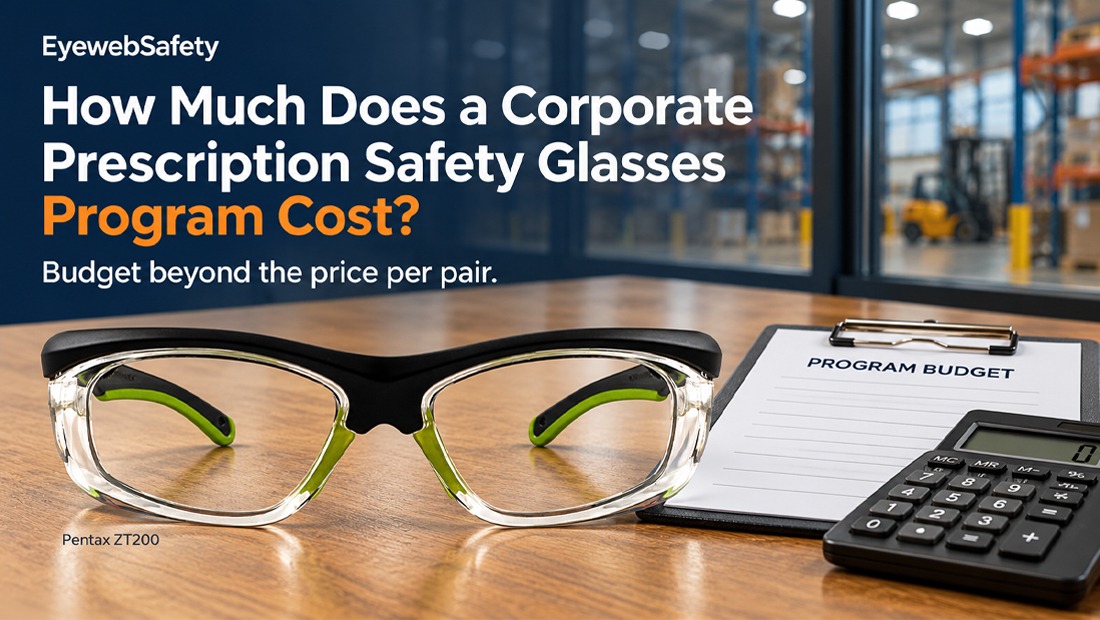
A corporate prescription safety glasses program is not the cost of one pair of glasses. Frames, lenses, coatings, number of employees, shipping, replacements, and administration influence the total cost.
The good news is that the costs can be managed. By knowing what factors influence spending, employers can establish a realistic budget and prevent unpleasant surprises.
This guide explains what factors drive the program costs, how to estimate a yearly budget, and what to expect to spend more than the price of the glasses.
What Affects the Total Cost?
Many factors influence the total cost of a corporate prescription safety glasses program.
Frames are the first factor. Basic safety frames cost less than designer or specialty frames. Employers can offer a standard frame selection or allow employees to choose from a wider catalog.
Prescription lenses are the second factor. Single vision lenses typically are less expensive than bifocals or progressive lenses. Some employees may need different lens types if they have stricter requirements or prescriptions.
Coatings are the third factor. Anti-scratch and anti-fog coatings increase the price but increase durability and comfort.
The fourth factor is the number of employees. The more employees you have, the bigger your overall budget. But if your program is larger, you might get better pricing or easier administration.
Several combinations can be used, depending on the work demands and the workforce. Each team in a warehouse may require different lenses than an office team.
Knowing corporate safety eyewear program pricing makes planning easier for employers. It also helps compare providers and find the right one.
How to Estimate an Annual Budget Per Employee
A few key inputs are required to estimate an annual budget.
- First, determine the number of eligible employees. This is the basis of the calculation.
- Second, estimate the prescription safety glasses cost per employee. This includes frames, lenses, and any necessary coatings.
- Third, create a replacement schedule. Some employers replace eyewear every two years. Others follow a different schedule due to changes in work or prescriptions.
For instance, if 100 people require eyewear at an average price of $200, and that eyewear needs to be replaced every two years, then the annual cost for eyewear is $10,000.
EyeWebSafety provides uniform pricing for all employees, making this process easier to budget. This simplifies cost budgeting across the workforce.
What an Employer Allowance Covers
The cost contribution by the employer for eyewear is referred to as an employer safety glasses allowance.
Employers may pay the full amount or split it between them and their employees. This gives flexibility depending on the company’s budget and benefits approach.
The allowance may cover:
- Base frames
- Standard prescription lenses
- Required coatings
The optional upgrades may be implemented in various ways. Some companies ask workers to cover the difference for premium frames or special coatings. Others cover a set amount and let employees pay the rest. Some cover all upgrades for certain roles.
Safety glasses lens upgrades can include top-quality frames, polarized lenses or photochromic lenses. Employers may choose to pay for these in full, in part, or not at all.
Prescription safety glasses reimbursement is another option. Some companies reimburse employees once they buy approved eyewear. Others pay directly through the program.
Keep rules clear to prevent confusion. Having a clear understanding of what is included and what isn't makes the process smoother.
Expenses to Account For Beyond the Base Price
A safety eyewear program budget should include more than just the cost of glasses.
- One cost to budget for is shipping. Depending on the location and order, prices may vary. While some providers will include delivery in the program cost, others will charge an additional fee.
- Safety eyewear replacement costs are another expense. Glasses can be replaced when broken, lost, or if the prescription needs to be adjusted. Setting aside a replacement reserve can help prevent budget shortfalls.
- Administrative costs are a third cost. This includes handling of rosters, approvals, and requests for support. EyewebSafety features centralized management that helps minimize administrative workload.
Planning for these costs will help prevent surprises. It also makes the program more manageable over time.
An Example Budget With Clear Assumptions
Here is a sample budget with clearly labeled assumptions. They are examples only, and prices are not guaranteed. The real costs vary by lens type, provider, and workforce requirements.
Item | Assumption | Example Annual Cost |
Eligible employees | 100 employees | $0* |
Prescription safety glasses | 100 employees × $200 per pair | $10,000 |
Replacement cycle | One pair per employee every 2 years; annualized cost | $10,000 |
Shipping | 50 orders per year × $10 per order | $500 |
Additional replacements | 10 additional pairs per year × $200 per pair | $2,000 |
Administration | Estimated annual administrative expenses | $1,000 |
Total estimated annual budget | $13,500 |
These numbers are examples only. Employers should customize the assumptions to their own workforce data and pricing.
Use a pilot program to test costs before expanding. This makes it easier to visualise what the actual numbers look like.
How EyeWebSafety Helps Manage Program Costs
EyeWebSafety provides tools to help control program costs and make budgeting easier.
- The platform offers a consistent pricing model to all employees, making the budgeting process easy. This will simplify budgeting for the entire workforce.
- Centralized management can minimize administrative workload. This means less time spent on rosters, approvals, and support requests.
- Employers may pay the entire cost or share it with their employees. This provides flexibility based on company budget and benefits.
- The platform is compatible with ANSI Z87.1 frames, prescription lenses, and coatings. This allows employers to provide appropriate protection without unnecessary complexity.
EyeWebSafety provides options for companies seeking affordable prescription safety eyewear programs. This makes it easier to protect without overspending the budget.
What to Review Before Setting a Budget
There are a few checks that can help set a realistic budget.
- Review workforce eligibility and participation. Count the number of employees who require prescription safety glasses.
- Check replacement history. Observe how frequently glasses are replaced because of breakage, loss, or prescription change.
- Review shipping and administration requirements. Think about the number of locations that need support.
- Consider optional upgrades. Determine if the company will pay for premium frames or special coatings.
Final Verdict
A corporate prescription safety glasses program is more than just the cost of glasses. It's a combination of frames, lenses, coatings, employee count, shipping, replacement, and administration.
Knowing these factors and planning with a transparent budget helps to avoid surprises and plan better as an employer. EyeWebSafety provides tools that can help control program costs and streamline budgeting.