

Last updated: Wednesday, August 26, 2026
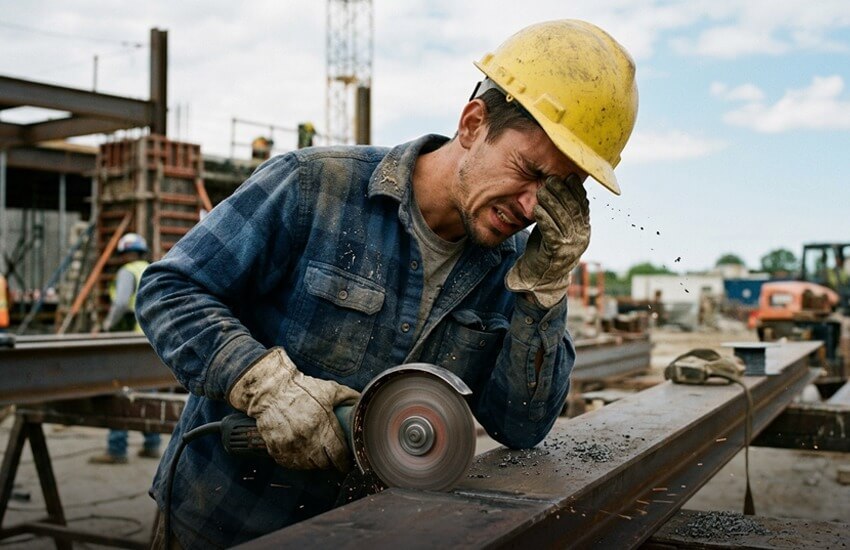
Workplace hazards can occur in seconds. A loose metal shaving flies off a lathe. Splashes of a dangerous liquid come from a hose. A stray concrete fragment shoots upward from a saw.
When eye injuries happen on the job, most managers think about immediate medical treatment. They count the immediate clinic bill and move on. That quick calculation misses the full cost.
Ignoring proper eye safety leads to several other costs across your company. The real costs include lost productivity, legal fees, higher insurance premiums, and lower team morale.
A well-planned eye safety program costs far less than an emergency room visit. Knowing about these unseen dangers can keep your team and your business safe.
Significance of Workplace Eye Protection
Every day, about 2,000 employees get eye injuries at work that require medical care. According to researchers, 90% of these accidents might be totally prevented with appropriately approved safety gear.
The Human eye is sensitive and delicate. A small dust particle can cause weeks of discomfort and poor vision by scratching the cornea. In a few seconds, chemical splashes can result in permanent blindness.
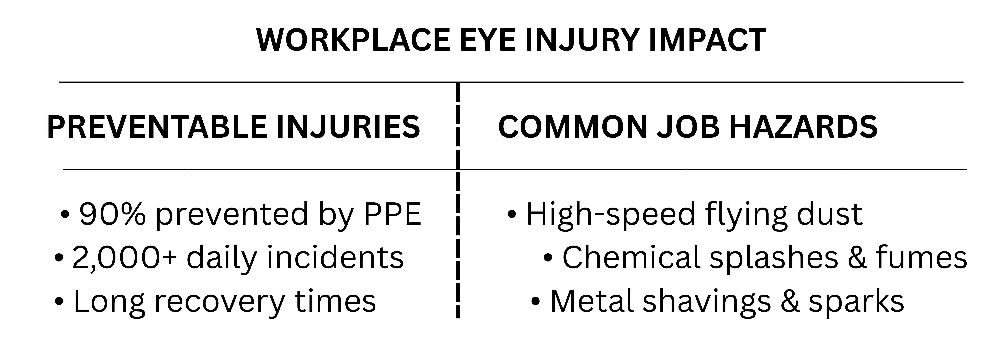
Eye hazards appear in nearly every industry. Power tools create constant dangers on construction sites. Industrial facilities are equipped with fast-moving machines and flying pieces of metal. Even battery maintenance staff are at risk of battery acid and airborne rust.
Protecting vision is a basic safety responsibility. Clear vision keeps employees safe, productive, and confident at work.
The Hidden Costs of Ignoring Eye Protection
Failing to enforce eye protection creates severe financial problems for companies. The true price tag extends far beyond a simple doctor's bill.
Expense Category | Direct Impact Items | Overall Financial Impact |
Direct Costs | Emergency care, workers' comp, OSHA fines | Immediate cash outflow per incident |
Indirect Costs | Lost labor hours, replacement training, higher insurance | Long-term business expense |
Human Costs | Chronic pain, lost wages, personal stress | Irreparable damage to workforce morale |
Direct Financial Costs
Direct costs appear immediately after an accident occurs. Emergency transportation, hospital stays, and eye surgical procedures cost a lot of money.
Workers' compensation claims include medical expenses and lost wages. When an employee suffers permanent vision loss, disability payments increase rapidly.
Federal regulatory fines increase the harm. OSHA will fine companies that do not provide certified protective eyewear. One safety violation can cost hundreds of thousands of dollars.

Indirect Business Costs
Indirect costs are less visible, but they hurt your business deeply. When an injury happens, work stops instantly.
Nearby employees drop their tasks to help. Managers spend hours documenting the scene and filling out incident reports.
- Lost Productivity: Work slows down while your team is dealing with the crisis.
- Replacement Hiring: Valuable time and money are spent on finding and training temporary workers.
- Surging Insurance Rates: Repeated injury claims lead to an increase in your Experience Modification Rate (EMR) and increase your premiums for years.
The total industrial eyes safety eyewear program cost is small compared to these ongoing business expenses.
Personal impact
Numbers in a spreadsheet tell you only part of the story. The impact of a vision loss injury is lifelong. An injured worker experiences serious pain and stress.
Team morale goes down at the plant. When a colleague becomes injured, workers become anxious. That fear leads to less efficient operations and higher turnover at your site.
Why Simply Providing Safety Glasses Is Not Enough
Providing cheap safety glasses at the door does not ensure safety. Many people leave their glasses in lockers or hanging around their necks.
Standard safety glasses do not fit everyone well. Loose frames slip off during physical labor. Tight frames pinch noses and cause severe headaches.

Workers who need vision correction face an even larger hurdle. Over-the-glasses goggles are bulky, heavy, and trap heat. They cause glare and blur vision.
When protective gear feels uncomfortable, workers take it off for "just a second." Many injuries happen during that short time.
Managing your corporate prescription safety glasses program cost-effectively eliminates these dangerous compliance gaps.
Building an Effective Safety Eyewear Program
A well-planned safety program makes safety a routine part of the job. It provides every worker with protective equipment that matches the hazards for each specific job.
Perform a Workplace Hazard Assessment
Start by auditing your facility floor thoroughly. Identify areas with flying particles, chemical splashes, intense heat, or optical radiation hazards.
Check out this detailed Eye Protection Standards Across Key Industries: A Complete Guide to match your workplace hazards with official safety compliance tiers.
Select the Right Safety Eyewear
Choose eyewear built for your specific work environment. Dust requires sealed frame gaskets. Flying metal shards require high-impact ANSI Z87+ ratings.
For workers who need vision correction, custom prescription safety frames are essential. The overall prescription safety eyewear program cost pays high returns by boosting daily compliance.
Ensure Proper Fit and Comfort
If it doesn't fit, it doesn't work. Offer several frame options for various face shapes.
Consider nose pads that can be adjusted and flexible temples. Anti-fog coatings maintain visibility on sweaty shifts. Scratch-resistant treatments prevent coarse dust and increase the lifespan of eye protection.
Train Employees
Eye protection only performs when it is used properly. Provide employee training on correct PPE use, cleaning, and storage.
Check out this Step-by-Step Guide to Choosing the Right Safety Glasses for Your Employees to create an effective training plan. Train the workers to recognize damaged frames and ask for replacements as soon as possible.

Inspect, Maintain, and Replace
Give clear directions for routine equipment inspections. Lenses with considerable scratches reduce impact strength and visibility.
Use the designated lens cleaning stations and clean microfiber cleaning cloths. Allow employees to replace broken eyeglasses immediately without any consequences.
Monitor Compliance
A strong safety culture is created by continuous and regular enforcement. By making sure that protective eyewear is always worn on the shop floor, employers may set a good example.
Conclusion
Avoiding eye protection at work is a huge financial and human risk. A single eye injury can result in thousands of dollars' worth of medical costs, missed work, and fines from the law.
Investing in protective eyewear will protect both your employees' safety and the profitability of your business.
Make sure to review your eye safety policies today. By upgrading your program today, you avoid expensive injuries tomorrow.